Category: Chatbot

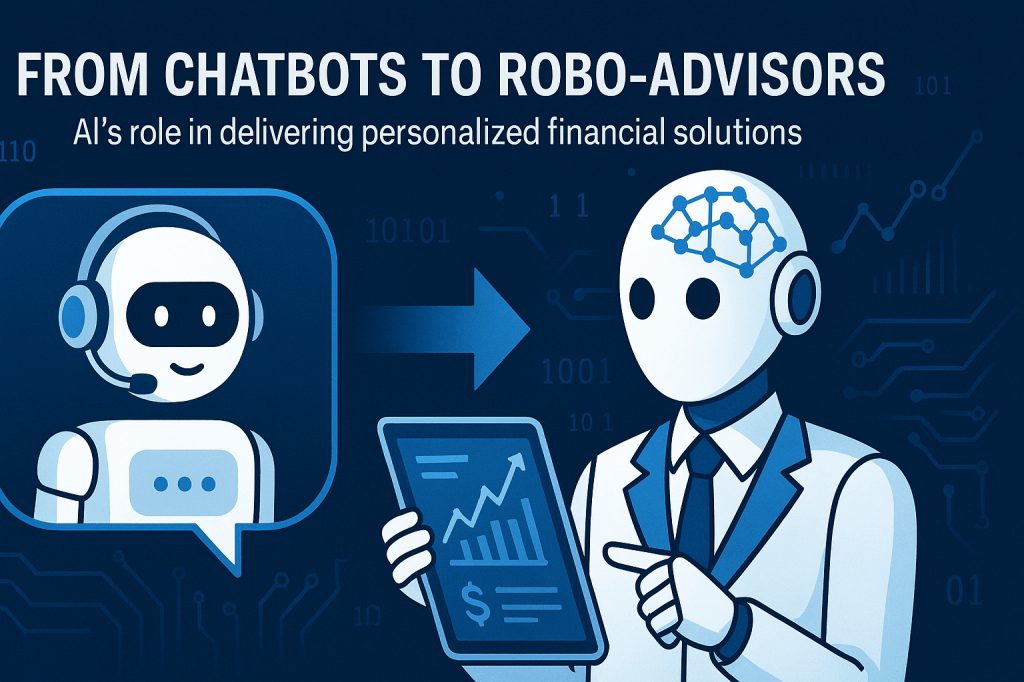
  • From Chatbots to Robo-Advisors: How AI Is Powering the New Wave of Personalized Financial Services

    From Chatbots to Robo-Advisors: How AI Is Powering the New Wave of Personalized Financial Services

    For years, financial services have been known for their lack of variety—products that work for everyone and relationships that aren’t really personal. But a huge change is happening because of how quickly Artificial Intelligence (AI) is becoming better. Statista says that the worldwide AI fintech industry will expand from $9.5 billion in 2021 to over $1.67 trillion in 2025. This shows how quickly AI-driven solutions are being used in finance.

    AI is changing the way financial services are offered in a big way. For example, intelligent chatbots provide fast customer help, while smart robo-advisors manage investment portfolios. This makes financial services more customized, accessible, and efficient.

    This article talks about how AI is changing the financial world, looking at the main uses, advantages, problems, and future trends that are defining this new era of customized financial services.

    The Rise of AI in Financial Services

    The present rise in AI use may seem revolutionary, yet it has been around in financial services for a long time. Early uses were mostly on finding fraud using rule-based systems and statistical analysis. But these algorithms had trouble adjusting to new types of fraud as they came up. Machine learning (ML), a part of AI, was the actual game changer since it lets computers learn from data without having to be programmed.

    The current speedup is due to the expansion of huge data, more powerful computers, and better algorithms. AI is now able to handle more difficult financial problems because of technologies like deep learning, natural language processing (NLP), and computer vision. These technologies go beyond mere automation to provide really tailored experiences.

    Key AI Applications Transforming Financial Services

    AI is having an effect on almost every part of the finance business. Here’s a list of the most important uses:

    Robo-Advisors

    Robo-advisors use algorithms to create and manage investment portfolios depending on a person’s risk tolerance, financial objectives, and time frame. This is perhaps the most obvious use of them. They provide those who can’t afford conventional financial advisers a low-cost option that is easy to go to, making investment management more accessible to everyone. Betterment, Wealthfront, and Schwab Intelligent Portfolios are other examples.

    AI-Powered Chatbots & Virtual Assistants

    Chatbots are changing the way banking companies help customers. They can answer common queries, provide account information, execute transactions, and even give rudimentary financial advice, all thanks to NLP.

    They are open 24 hours a day, seven days a week, which cuts down on wait times and makes customers happier. Bank of America (Erica) and Capital One (Eno) are two banks that have effectively used AI-powered virtual assistants.

    Fraud Detection & Prevention

    AI is great at finding fake transactions and trends that people may overlook. Machine learning systems look at huge amounts of data in real time, reporting any behavior that seems suspect and stopping money from being lost. This is very important for banks, credit card firms, and insurance organizations.

    Credit Risk Assessment

    A lot of the time, traditional credit scoring algorithms don’t have enough data. AI can look at additional types of data, such as social media activity, online conduct, and alternative credit data, to provide a more accurate and detailed picture of someone’s creditworthiness. This makes it easier for those who don’t have access to credit to get it.

    Algorithmic Trading

    AI-powered algorithms make deals at the best prices and speeds, taking advantage of market inefficiencies. AI is a big part of how high-frequency trading (HFT) businesses look at market data and make split-second trading choices.

    Personalized Banking & Financial Planning

    AI can look at a customer’s financial information and provide them specific advice on how to budget, save, pay off debt, and invest. This is more than just giving product suggestions; it’s about giving guidance on how to arrange your finances as a whole.

    Insurance Underwriting & Claims Processing

    AI is making the insurance process easier, from creating policies to handling claims. Machine learning algorithms can better evaluate risk, process claims automatically, and find false claims.

    Regulatory Compliance (RegTech)

    There are a lot of rules in the financial business. AI can automate operations that are required by law, such as KYC/AML checks, monitoring transactions, and reporting to regulators. This saves money and makes things more accurate.

    Benefits of AI-Powered Personalized Financial Services

    Using AI in financial services has a lot of advantages for both customers and banks:

    • Enhanced Customer Experience: Personalized suggestions, help around the clock, and speedier service delivery all make for a better customer experience.
    • Increased Accessibility: More people can use financial services thanks to robo-advisors and AI-powered solutions. This is true for people of all income levels and levels of financial knowledge.
    • Reduced Costs: Financial institutions may pass on cheaper prices to clients since automating operations and making things run more smoothly lowers their operational expenses.
    • Improved Risk Management: AI-based technologies for detecting fraud and assessing credit risk help lower financial risks and keep customers safe.
    • Greater Efficiency: Automating jobs makes them easier, allowing people to focus on harder duties.
    • Data-Driven Insights: AI gives financial companies useful information about how customers act and how the market works, which helps them make better choices.
    • Personalized Financial Advice: AI can provide people financial advice that is specific to their needs and goals, which may help them reach their financial goals.

    Challenges and Considerations

    AI has a lot of good things to offer the financial services business, but it also has certain problems and ethical issues that need to be dealt with.

    Key Challenges

    • Data Privacy: Using AI in financial services means having access to a lot of consumer data, which raises worries about the safety and privacy of that data.
    • Bias and Fairness: AI algorithms can unintentionally keep biases that are already in the data they are trained on, which can lead to unfair results for some groups of customers.
    • Regulation: The fast rate of AI development in the financial services sector has made it hard for regulators to keep up, which has made things unclear for banks and other financial firms.
    • Transparency: AI algorithms may be hard to comprehend and complicated, which makes it hard for consumers and regulators to know how choices are made.

    Ethical Considerations

    • Accountability: Financial institutions must make sure they are responsible for the choices made by AI systems, especially when it comes to things like credit rating and fraud detection.
    • Fairness: Banks and other financial organizations must make sure that their AI systems are fair and don’t treat certain customers better than others.
    • Transparency: Banks and other financial organizations should be open about how they utilize AI and make sure clients understand how choices are made.
    • Security: Banks and other financial organizations need to make sure that their AI systems are safe and safeguarded from cyberattacks.

    Future Trends Shaping AI in Financial Services

    The future of AI in finance is exceptionally promising, with ongoing technological advancements set to drive even greater innovation. Key trends shaping AI in Finance include hyper-personalized digital banking experiences, enhanced fraud detection, and the rise of autonomous finance powered by AI agents. Some of the key trends to watch in the coming years include

    • Increased Personalization: AI will help banks and other financial organizations provide even more individualized financial goods and services, which will make the client experience better.
    • Integration with Emerging Technologies: AI will be used with new technologies like blockchain and the Internet of Things (IoT) to create new financial services and solutions.
    • Enhanced Risk Management: AI will become more crucial in managing risk and finding fraud, giving us more accurate and quick evaluations.
    • Regulatory Frameworks: As AI becomes more common in financial services, regulatory frameworks will change to deal with the problems and moral issues that come up. This will make things clearer and easier for financial organizations.

    Conclusion

    AI is no longer just an idea for the future in financial services; it’s a reality right now that is changing the business at an unprecedented rate. AI is giving both customers and financial institutions more power by automating simple chores and providing individualized financial advice. There are still problems with data privacy, algorithmic bias, and unclear rules, but the advantages of AI-powered tailored financial services are clear.

    As AI technology becomes better, we should expect to see even more new uses for it that will change the financial world even more and make the future of finance more accessible, efficient, and tailored to each person’s needs. Responsible innovation, putting ethics first, and encouraging people and robots to work together will be the keys to success.
  • Advantages of Integrating AI Chatbots with CRM Systems

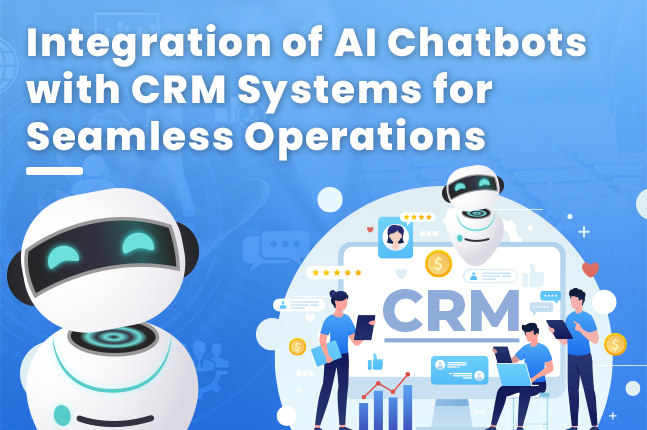
    Advantages of Integrating AI Chatbots with CRM Systems

    The adoption of AI chatbots has surged across industries, transforming how businesses engage with customers and manage operations. These intelligent tools, equipped with natural language processing (NLP), enable companies to provide real-time assistance, automate repetitive tasks, and deliver personalized experiences at scale. While AI chatbots have proven to be game-changers individually, their integration with Customer Relationship Management (CRM) systems takes their capabilities to the next level.

    Integrating AI chatbots with CRM systems allows businesses to combine the conversational power of chatbots with the organizational and analytical strength of CRM platforms. This synergy enables seamless data sharing, enhanced customer interactions, and optimized workflows, resulting in a more efficient and customer-centric approach to business operations.

    In this article, we’ll explore the benefits of integrating AI chatbots with CRM systems, including enhanced customer interaction, automated data entry and management, and improved lead generation and qualification.

    Benefits of Integrating AI Chatbots with CRM Systems

    Enhanced Customer Interaction

    AI chatbots excel at delivering real-time responses to customer inquiries, ensuring immediate assistance and boosting satisfaction. When integrated with CRM systems, these chatbots can access detailed customer profiles, including past interactions, preferences, and purchase history, to provide highly personalized responses.

    For instance, if a returning customer inquires about their recent order status, the chatbot can quickly retrieve relevant information from the CRM and respond, “Your order #12345 has been shipped and will arrive on Friday.” This level of personalization not only resolves queries efficiently but also fosters a sense of trust and loyalty.

    Moreover, NLP-powered chatbots ensure conversations feel natural and engaging, creating a human-like experience that strengthens customer relationships. By leveraging CRM data in real-time, chatbots can proactively address customer needs, recommend products, and even upsell or cross-sell items, enhancing both the user experience and revenue opportunities.

    Automated Data Entry and Management

    Data management is a critical yet time-consuming aspect of CRM usage. Integrating AI chatbots automates the capture and organization of customer information, eliminating the need for manual entry and significantly reducing errors.

    For example, during a conversation with a prospect, the chatbot can gather essential details such as name, email address, and preferences. This information is automatically synced with the CRM system, creating a new contact or updating an existing profile.

    This seamless synchronization ensures that all customer data remains accurate and up-to-date, enabling businesses to maintain a comprehensive and reliable database. Additionally, by automating routine administrative tasks, businesses can free up their teams to focus on more strategic activities, such as building relationships and closing deals.

    Improved Lead Generation and Qualification

    AI chatbots are powerful tools for engaging prospects and qualifying leads, and when paired with CRM systems, their capabilities are amplified. Chatbots can initiate conversations with website visitors, ask qualifying questions, and determine the prospect’s level of interest based on CRM insights.

    For instance, a chatbot might ask, “Are you looking for a solution for personal use or your business?” Based on the response, the chatbot can assess the lead’s potential and categorize them accordingly. High-quality leads are then flagged and seamlessly handed off to the sales team via the CRM, complete with conversation history and relevant context.

    This streamlined process ensures that sales teams focus their efforts on the most promising leads, reducing wasted time and improving conversion rates. By integrating AI chatbots with CRM systems, businesses can not only capture more leads but also nurture them effectively, driving sustainable growth.

    Personalized Marketing Campaigns

    Integrating AI chatbots with CRM systems revolutionizes marketing campaigns by creating more personalized and targeted messaging. Chatbots interact with customers in real-time, collecting valuable insights about their preferences, behavior, and purchase history. This enriched CRM data enables businesses to deliver marketing messages that resonate deeply with individual customers.

    For example, a chatbot might note that a customer frequently inquires about eco-friendly products. Using this insight, a marketing campaign could include personalized promotions like, “Explore our new sustainable collection—crafted just for environmentally conscious shoppers like you.” This level of personalization increases engagement, drives conversions, and builds brand loyalty.

    By automating targeted marketing efforts, businesses save time and resources while ensuring their campaigns are relevant and impactful. This integration allows marketers to strike the perfect balance between efficiency and personalization, ensuring a superior customer experience.

    Streamlined Customer Support

    AI chatbots integrated with CRM systems offer unparalleled efficiency in customer support. By accessing CRM data, chatbots can quickly retrieve a customer’s history, preferences, and past interactions, enabling them to provide context-aware support.

    For instance, if a customer reaches out with an issue regarding a recent order, the chatbot can immediately reference details such as order status, payment history, and previous conversations. This ensures faster resolution of inquiries without requiring the customer to repeat information, resulting in a seamless support experience.

    Moreover, chatbots can escalate more complex issues to human agents, complete with all relevant CRM data. This streamlined handoff not only improves resolution times but also enhances the overall quality of support. Businesses benefit from improved efficiency, while customers enjoy prompt and effective service.

    Actionable Insights and Analytics

    The integration of AI chatbots with CRM systems provides businesses with actionable insights that drive informed decision-making. Every interaction between a chatbot and a customer generates valuable data, revealing trends, preferences, and potential areas for improvement.

    For example, if chatbots frequently handle inquiries about a specific product feature, this could indicate a need for clearer product descriptions or additional support materials. These insights are fed into the CRM, enriching its analytics capabilities and providing a more comprehensive view of customer behavior.

    Real-time analytics from chatbot interactions also help businesses identify emerging trends, enabling them to adapt quickly to changing market demands. This data-driven approach ensures that marketing, sales, and support strategies are aligned with customer expectations.

    Scalability and Efficiency

    As businesses grow, so does the volume of customer interactions. AI chatbots integrated with CRM systems provide a scalable solution for managing this increased demand without the need for additional resources. Chatbots can handle multiple conversations simultaneously, ensuring consistent service quality even during peak periods.

    For instance, during a product launch or holiday season, chatbots can address thousands of customer inquiries in real-time, providing information about availability, discounts, and shipping timelines. This scalability ensures that businesses can maintain seamless operations and deliver excellent service, regardless of interaction volume.

    By automating repetitive tasks and optimizing workflows, this integration allows businesses to scale efficiently while focusing on strategic growth initiatives.

    Conclusion

    The integration of AI chatbots with CRM systems offers transformative benefits for businesses. From personalized marketing campaigns and streamlined customer support to actionable insights and scalable operations, this synergy empowers businesses to deliver exceptional customer experiences and drive efficiency.

    Collaborating with an AI chatbot development company in USA can ensure the seamless implementation of this technology, providing tailored solutions that maximize the potential of chatbot-CRM integrations. These companies bring expertise in designing and deploying chatbots that align with business objectives and customer needs.

    Embracing this integration enables businesses to optimize workflows, improve customer satisfaction, and stay competitive in an ever-evolving marketplace. By combining the conversational power of chatbots with the organizational strength of CRM systems, companies can unlock new opportunities for innovation and growth.

    Looking ahead, the potential for AI-chatbot and CRM integrations will continue to expand as technology advances. With smarter tools and deeper data insights, this integration will play a critical role in shaping the future of business processes, ensuring companies remain agile, customer-focused, and ready for tomorrow’s challenges.

Design a site like this with WordPress.com
Get started